


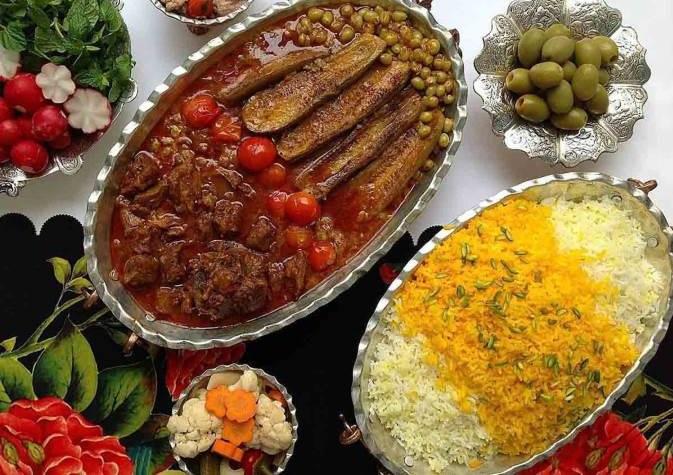
Persian Eggplant Stew with Beef and Tomato (Khoresh-e Bademjan)
Khoresh-e bademjan, sometimes spelled bademjoon, is one of the most beloved dishes in Persian cuisine , a slow-simmered stew of eggplant, tender beef (or lamb), and tomato, brightened with a distinctive tartness that sets it apart from other tomato-based stews. In Farsi, bademjan means eggplant and khoresh means stew, and this particular dish is a fixture at traditional Iranian dinner parties, almost always served ladled over fluffy basmati rice.
Stews, or khoresh, sit at the heart of Iranian home cooking. Alongside rice dishes, they form the backbone of the everyday Persian table — each one built on a foundation of aromatics, a protein, and a defining flavor note that gives it its character. For khoresh-e bademjan, that defining note is tartness, balanced against the sweetness of slow-cooked tomato and the silky richness of eggplant that's been fried until nearly creamy.
That signature tang can come from a few different sources, depending on the cook and the region:
Fresh lime or lemon juice — bright and straightforward, stirred in near the end of cooking
Limoo amani (dried Persian limes) — whole dried black limes simmered directly in the stew for a deep, slightly smoky sourness
Abghooreh (sour grape juice) — a tart, verjuice-like addition
Ghooreh (sour grapes) — the unripe grapes themselves, adding sourness and texture
Whichever souring agent you choose, the result is a stew that's rich and hearty but never heavy — savory, tart, and deeply aromatic, exactly the kind of dish that anchors a Persian dinner spread.