A Journey Through Persian Poems
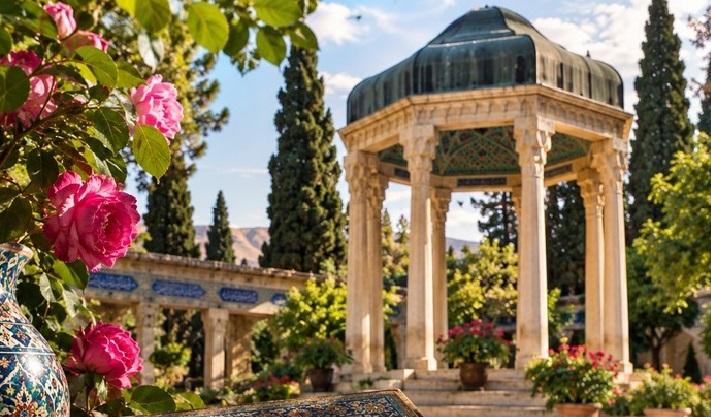
Exploring a Thousand Years of Persian Poetry An Introduction to Persian Poetry This literary journey introduces approximately thirty Persian poems in English translation, accompanied by brief biographies and insights into the lives and works of their poets. Spanning nearly a thousand years, the collection begins with poetry from the first half of the tenth century and extends to works from the twentieth century. Rooted in the classical Persian literary tradition, these poems reflect a rich intellectual and spiritual heritage, much of which has been shaped by Sufi thought. Although not all the poets were Sufis, many explored themes of divine love, spiritual transformation, human existence, and the search for truth. Several of these poets are among the most celebrated figures in Persian literature. Their verses remain deeply embedded in Iranian culture, continuing to be recited, quoted, and cherished in homes and public spaces throughout the country. One remarkable feature of Persian poetry is the enduring accessibility of its classical language. Although Persian has evolved over the centuries, many classical poems remain familiar to contemporary Persian speakers. Poetry continues to thrive as part of Iran's living cultural tradition, connecting generations through shared words, imagery, and ideas. Understanding Persian and English Poetry Although Persian and English poetry share many literary qualities, they often approach poetic expression in different ways. English poetry frequently develops a narrative, builds an argument, or follows a progression of thought. Shakespeare's sonnets, for example, often guide readers through a sequence of reflections that culminate in a central insight. Classical Persian poetry, by contrast, frequently presents a series of relatively independent couplets or images connected by a common theme. Rather than relying on a continuous narrative, a poem may explore its central idea through multiple perspectives, each verse offering a new reflection or emotional dimension. The relationship between these verses resembles the facets of a finely cut gemstone: each facet possesses its own beauty, yet together they create a harmonious and brilliant whole. The Beauty and Symbolism of Persian Poetry One of the greatest pleasures of discovering Persian poetry is encountering its distinctive imagery, which can offer readers unexpected perspectives on familiar experiences. Consider these translated lines attributed to Hafez: “When spring brings life to the meadow’s edge, you sweet bird, Will draw the rose’s parasol to shield your head. So do not grieve.” In another poem, the human body becomes a cage from which the soul longs to escape: “Such a cage is not worthy a bird who sings so sweet: To paradise I’ll fly, for that meadow’s my true space.” Rumi offers another evocative example in a poem addressed to Salah al-Din: “Veiled like the soul, making me whole, You enter my heart. Elegant as a tree, delighting me, You stand apart. Slender and tall, With a garden’s art.” These images reveal the imaginative richness of Persian poetry, where nature, beauty, and spiritual longing frequently intertwine. Gardens, in particular, occupy a central place in the Persian imagination. They represent not only beauty, renewal, and tranquillity but also an earthly reflection of Paradise. This symbolism extends beyond literature into Persian architecture, painting, ceramics, and garden design, illustrating the close relationship between poetry and the wider artistic heritage of Iran. Sufism and the Spiritual Dimensions of Persian Poetry Many Persian poems explore profound questions about human existence, faith, love, and the relationship between humanity and the divine. Some speak with remarkable directness. Rabi'a's passionate criticism of an unfaithful lover, for example, expresses the intensity of personal emotion, while Ansari's dialogues with God explore the relationship between divine justice and mercy. To appreciate other works, it is helpful to understand the broader context of Sufism within Islamic spirituality. Sufism developed during the early centuries of Islam. Some of its earliest practitioners emphasized asceticism, simplicity, and detachment from worldly possessions. As Islam expanded throughout the Middle East, Muslim thinkers encountered diverse religious and philosophical traditions, contributing to a complex intellectual environment in which different approaches to spirituality developed. Many Sufi traditions emphasized the pursuit of a deeper relationship with God through love, devotion, self-discipline, and spiritual guidance. The relationship between a spiritual master and a disciple could play an important role in this journey. A central concept in much Sufi thought is the transcendence of the ego. Spiritual fulfilment requires moving beyond excessive attachment to the self and worldly ambitions in pursuit of a more profound understanding of existence. Sufism, however, is not a single, uniform doctrine. It encompasses diverse schools of thought, interpretations, and practices. Some Sufi thinkers and poets also challenged established religious authorities or questioned interpretations of religion that they considered overly rigid. Persian poets explored these questions through symbolism, metaphor, paradox, and personal reflection. Their works invite readers to consider the relationship between outward appearances and inner truth. One recurring theme is the belief that love can become a path towards spiritual transformation and the discovery of God. Sa'di expresses this idea in the following translated verses: “If you are a person of love, think less of yourself; Otherwise, take the easier path, absorbed in self. Do not fear love, though it consumes you utterly; Even as it destroys you, it grants life beyond death. A plant does not grow instantly from a seed; First, its understanding of the world must be transformed. What enables you to perceive divine truth Is precisely what frees you from yourself.” The journey towards spiritual understanding also requires humility and self-awareness. Bidel warns against confusing the appearance of spiritual progress with genuine transformation: “Do not delude yourselves that you Are drawing close to God. Since you have never escaped yourself, Where could you possibly have gone?” These verses illustrate a recurring concern in Persian mystical poetry: the search for truth begins with an examination of the self. The Search for God in Persian Poetry For many Persian poets, the ultimate purpose of spiritual life is to draw closer to God. Hafez expresses this longing through powerful images of suffering, beauty, and the transformation of the self: “My heart bleeds, scented with Divine desire. My agony is like the musk deer, whose perfume costs its life. Though clothed in spun gold, I am not soft candlelight; Beneath my robe of honor, burn flames you cannot trace. Come, lift Hafez beyond his being and himself; Once I have found You, no one will hear me say ‘I am.’” The search for divine truth is not always presented as a straightforward journey. Persian poets draw upon a wide range of religious, philosophical, and literary traditions to explore humanity's longing for spiritual understanding. Within Islamic culture, the Prophet Muhammad occupies a central position as a source of religious guidance. Jesus and Mary, as revered figures in Islamic tradition, also provide important points of connection between religious narratives. Persian poetry also frequently presents the natural world as a reflection of divine beauty. Sa'di celebrates the connection between creation and its Creator: “I rejoice in the world because of this: Because the world itself rejoices in God. I am in love with every star in the galaxies, Because the whole wide world is His.” The beauty of human beings can likewise become a means of perceiving the divine. The poet Iraqi expresses this idea through the imagery of beautiful faces and expressive eyes: “In the beauty of lovely faces, I saw Him made plain; In the flash of exquisite eyes, the beauty I saw was Him.” Such verses illustrate how Persian poetry often moves between the visible and invisible worlds, presenting beauty, nature, and love as possible pathways towards spiritual insight. Love, Ecstasy, and the Mystery of Existence Love is one of the most enduring themes in Persian poetry. Depending on the poem and its interpretation, it may refer to divine love, romantic attachment, physical desire, spiritual devotion, or a combination of these experiences. Another recurring theme is ecstasy, frequently expressed through images of wine, music, dancing, and the abandonment of ordinary restraints. At first glance, such imagery may appear inconsistent with conventional interpretations of Islamic religious practice. Within Persian mystical poetry, however, wine and intoxication can function as metaphors for spiritual awakening, overwhelming love, and liberation from the ego. Nevertheless, not every reference to wine or romantic passion should automatically be interpreted as mystical symbolism. The relationship between human love and divine love remains one of the most fascinating and widely discussed aspects of Persian literature. Even today, these poems continue to inspire debate about the nature of their imagery and the intentions of their authors. Are they expressions of earthly desire, spiritual longing, or both? Their enduring appeal lies partly in their ability to accommodate different interpretations without losing their emotional power. Persian Poetry, Philosophy, and the Meaning of Life Persian poetry encompasses a remarkable range of philosophical perspectives. Some poems explore metaphysical questions comparable to those found in the works of English poets such as John Donne and Henry Vaughan. Others focus more directly on the limitations of human knowledge, the uncertainty of the future, and the significance of love and life in the present. Questions about death, eternity, and what may lie beyond human existence recur throughout the Persian literary tradition. Rather than always offering definitive answers, many poets invite readers to reflect on the limits of human understanding. Naser Khosrow explores the passing of time and the uncertainty surrounding human existence: “Discomforts and trials in this world are long drawn out, Yet agony and joy will certainly one day cease. Has not the wheel turned for us day and night? Each moment passes, and the next follows in its trace. Here we travel and complete our journeys, Until our journey after death begins.” Omar Khayyam approaches the mysteries of existence with a similar sense of uncertainty: “The mysteries of eternity, neither you can know, nor I. The cryptic letters, neither you can decode, nor I. It comes from behind a screen, our converse, yours and mine, And when the curtain falls, neither you remain, nor I.” Through these reflections, Persian poetry explores some of humanity's most enduring questions: What can we truly know? What gives life meaning? How should we understand death? And what is the relationship between human experience and eternity? Discover the Enduring Legacy of Persian Poetry The poems in this collection offer a glimpse into the richness and diversity of Persian literary heritage, a tradition that continues to hold a special place in Iranian culture. Through their exploration of love, spirituality, beauty, uncertainty, and the human condition, these works reveal a multifaceted intellectual and artistic tradition. They invite readers to look beyond familiar assumptions and discover perspectives shaped by centuries of philosophical inquiry, literary creativity, and cultural exchange. Persian poetry also offers an opportunity to explore dimensions of Islamic civilization that emphasize love, compassWe invite you to continue this literary journey and discover the timeless wisdom, emotional depth, and artistic brilliance of Persian poetry through A Journey Through Persian Poems.ion, spiritual reflection, and the search for truth.