

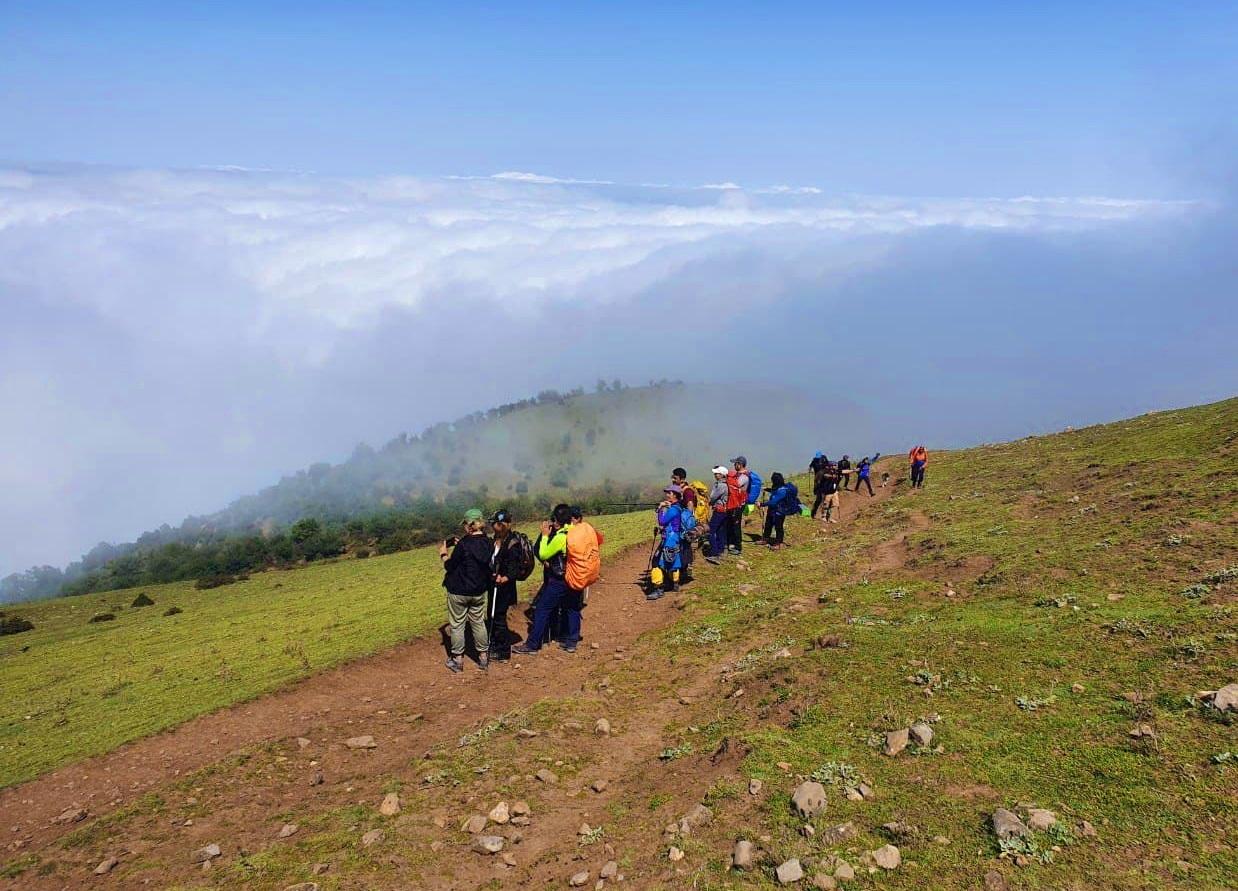
If you are ready for pure nature tourism, read on. This article describes some of the best trekking trails in Iran in detail.
Iran's trekking routes fall into two broad categories: those best walked in the warm seasons, when the mountains offer cool air, and those best walked in the cold seasons, when warmer regions offer a gentler climate. This article focuses on the first category.
Experienced travelers know that few countries have a climate as varied as Iran's. You can experience something close to four seasons in a single day simply by traveling from one region to another. It is a little like having a time machine.
Thanks to the Alborz and Zagros ranges, roughly half of the country is mountainous. If you enjoy cool, fresh air, towering waterfalls, green hills and valleys full of wildflowers, head to the northern or western mountains in the early months of the Persian year. Below are some of the most beautiful and unspoiled trekking trails in Iran's highlands.
1. Talesh Mountains
The Talesh range stretches across the provinces of Zanjan, Ardabil and Gilan. Its two best-known peaks, Tilar and Baghru, make it one of the country's most important trekking and mountaineering destinations. The region blends natural beauty with the traditions of Gilaki and Azeri culture.
By joining a group or a professional tour, you can meet local villagers and watch livestock farming in the foothills of Talesh. From there, you can continue to the highlands of Ardabil, Cheshmeh Anna Bolaghi and Lake Nevar.
If your time is limited, make Talesh itself your main destination. Nearby highlights include Hyrkani National Park, Varzan, Subatan, Gisum Forest Park, the Gorgan River, Lake Saragah, Siah Daran Forest Park and the Dokhaleh area. Routes between Talesh and each of these sites rank among the best treks in Iran.
2. Sabalan Mountains
Do not miss the chance to trek toward Mount Sabalan, one of Iran's highest mountains at more than 4,000 meters (about 4,800 meters at its summit). The area offers volcanic landscapes, plains and valleys dotted with red tulips, spas on its slopes, aromatic herbs such as ox-tongue flowers, and wildlife including bears, foxes and rabbits. There is also a natural eagle-shaped rock formation on the western face of Zalali peak, and a lake fed by melting snow. It is hard to find so many of these features together anywhere else in Iran.
For a relaxed trip, we recommend visiting Ardabil and Sabalan in summer. At that time there is little snow on the trail, the lake is not frozen, and trekking and camping are safe.
3. Damavand Mountain
Standing at about 5,600 meters, Damavand is the natural symbol of Iran and the roof of the country. You do not need full mountaineering gear or a hard icy ascent to enjoy it. Just drive about 70 km from Tehran, then choose between a forest and a cave. Depending on your choice, you will find a trek ranging from a few minutes to a few hours.
Popular options include:
• Cheshmeh Ala, about 4 km from Damavand
• Dasht-e Mosha, about 6 km away
• Tar and Havir lakes, about 25 km away
• Rudafshan Cave, about 50 km away
• Tizab and Farah-Afza waterfalls, about 1 km and 5 km from the town of Damavand
Each of these makes an excellent base for trekking and nature tourism.
4. Taleghan Valley
Every corner of the Alborz range seems to offer beauty, and Taleghan Valley is no exception. Located in Alborz Province, about 90 km from Karaj, it is one of the most exciting trekking destinations in Iran.
On a summer day (or in early autumn), set out for Se Hezar Valley. This trek is about 40 km long and takes up to three days. The route climbs gradually to roughly 4,000 meters before descending back into the valley. Along the way you will pass rivers, springs and waterfalls under clear blue skies, and see landscapes that few people ever witness.
5. Zard Kooh Mountains
Zard Kooh lies in the Zagros range, in the scenic province of Chaharmahal and Bakhtiari. At about 4,200 meters, it is the second-highest peak in the Zagros after Dena. Its name, which means "yellow mountain," comes from its distinctive yellow soil. The Karun and Zayandeh Rud rivers both begin at its foot, and many medicinal plants grow on its slopes.
The area's natural beauty and the traditional way of life of the Koohrang nomads attract mountaineering and nature-tourism groups from around the world each year. Highlights include Koohrang Waterfall, the Overturned Tulip Plain, Sheikh Ali Khan Waterfall, oak forests, Dimeh Spring and the village of Sara Agha Seyed.
To visit, travel from Shahrekord to Koohrang and explore the area step by step. Spring is the best season, but in winter you can also ski on the snowy heights.