

The Most Spectacular Island to Cycle in Iran
Don't think that traveling to Iran is limited to visiting historical monuments — there are plenty of other adventures waiting, including a bike tour.
A bike tour puts you right in the heart of the landscape and local culture, and connects you with the people in a way a bus window never can. Whether you're an avid cyclist or just enjoy a leisurely pedal, grab your bike and read on — this is our guide to cycling the most spectacular island in Iran.
Why Qeshm Island
Cycling Qeshm Island takes you past some of the country's most striking natural attractions: the wind-carved formations of Star Valley, an underground salt cave, and the otherworldly mangrove forests along the coast.
Locally known as "Hara," these mangroves are one of the region's rare ecological wonders — trees that grow rooted in seawater, vanishing under the tide and reappearing as it recedes. The forest is a protected biosphere reserve and a nursery for fish and migratory birds, so a ride along its edge is as much a wildlife encounter as a workout.
You'll pedal along the Hara forests and the Salt River, taking in the coastline where the water is fringed with coral reefs. It's the kind of ride that leaves you with more than tired legs — expect a genuinely memorable few days on two wheels.
Mountain Biking on the Beach
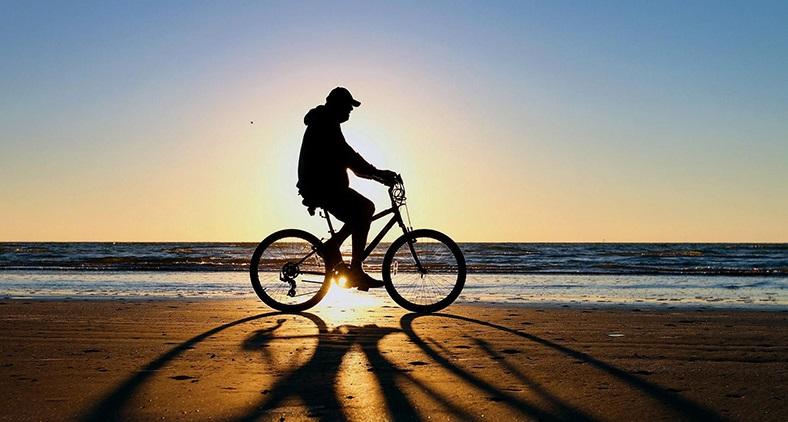
Technically, you can ride the soft sand of Qeshm's beaches on a mountain bike — it's just not easy. Your best shot is sticking close to the waterline, where the sand is more compact and offers a bit more grip.
Mountain bikes are built for off-road terrain, and a beach certainly qualifies. The catch is the sand itself: soft sand saps traction and has a habit of putting riders on the ground when they least expect it. If you're serious about beach riding, a fat bike — with its wide, low-pressure tires — is the better tool for the job. But if a mountain bike is what you've got, here's how to get the most out of it on soft sand.
Fill up your tires. Tires and inner tubes are naturally permeable, so they lose a couple of pounds of pressure after even just a few days sitting unused. Top them off before you ride — under-inflated tires sink into sand instead of rolling over it.
Adjust your seat. One of the most common mistakes cyclists make is riding with the seat too low. It's harder on the knees and makes every pedal stroke less efficient. As a rough guide, the seat should sit level with the top of your hip bone when you stand beside the bike. A more reliable test: get on and pedal. You want a slight bend — about 30 degrees — in your knee when the pedal is at its lowest point.
What to Bring
Sun protection. Keep your skin covered with sunscreen any time you're out in daylight — even on overcast days, 70 to 80 percent of UV rays still get through, according to the Skin Cancer Foundation. Sunglasses are worth packing too, both for the glare off the water and for the sand the wind kicks up along the coast.
Water. Sun and exertion dehydrate you fast, especially on a warm day. Most bikes have a built-in bottle cage — fill yours with ice before you set off so it stays cool for the ride.
Take a little time out on two wheels and you'll discover some of the finest jewels in Qeshm's coastal crown.