

Saadi Shirazi: The Life, Poetry, and Legacy of Persia's Great Poet
Saadi Shirazi is one of the most celebrated figures in Persian literature and is widely regarded as one of the greatest poets and prose writers of the classical Persian era. Known for his remarkable eloquence, philosophical insights, and timeless wisdom, he is honored with the title Master of Speech (Ustad-e Sokhan).
Born in Shiraz in the early 13th century, Saadi received his early education in his hometown before traveling to Baghdad to study Islamic sciences, theology, law, history, and Arabic literature at the renowned Nizamiyya School.
His life was marked by extensive travels and encounters with different cultures. According to his accounts, he journeyed through various regions, including Anatolia, Syria, Egypt, and Iraq. These experiences provided inspiration for many of his stories, reflections, and literary works.
Saadi's two most famous masterpieces are Bustan (The Orchard) and Golestan (The Rose Garden). Through poetry, anecdotes, and philosophical reflections, he explored universal themes such as justice, kindness, love, generosity, humility, and human dignity.
His works have transcended geographical and cultural boundaries and continue to be admired by readers around the world.
Saadi was not only a poet but also a scholar and traveler who reportedly spent part of his life wandering as a dervish. His extensive knowledge and spiritual insights earned him the honorary title of Sheikh.
He eventually returned to his beloved birthplace, Shiraz, where he spent the final years of his life. Today, his legacy remains deeply connected to the cultural identity of the city.
Bustan: Saadi's Masterpiece in Persian Poetry
Completed in 1257, Bustan is one of Saadi's most celebrated literary masterpieces. Unlike Golestan, which is mainly written in prose, Bustan is composed entirely in verse.
The book consists of ten chapters and approximately 4,000 verses, exploring fundamental human virtues and ethical principles. Its central themes include justice, kindness, love, humility, generosity, contentment, gratitude, and happiness.
Through engaging stories and profound philosophical reflections, Saadi encourages readers to lead meaningful lives, treat others with compassion, and pursue moral excellence.
Sometimes referred to as Saadi Nameh in older editions, Bustan remains one of the finest examples of classical Persian poetry.
Golestan: A Timeless Treasure of Persian Prose
Completed in 1258, just one year after Bustan, Golestan is widely considered one of the most influential works of Persian prose.
Unlike the entirely poetic Bustan, Golestan combines prose with short poems, creating a distinctive literary style that blends storytelling, humor, wisdom, and moral instruction.
The book consists of eight chapters covering different aspects of human behavior and social life:
The Conduct of Kings
The Morals of Dervishes
The Virtues of Contentment
The Benefits of Silence and Speaking at the Right Time
Love and Youth
Weakness and Aging
The Effects of Education
Rules of Conduct in Social Life
Through anecdotes, quotations, and practical advice, Saadi offers valuable lessons about human relationships, social responsibility, and personal development.
Beyond its literary importance, Golestan provides a fascinating picture of the cultural, political, and social conditions of 13th-century Persia. Some of its stories are based on real experiences, while others are fictional accounts designed to communicate moral lessons.
An early printed edition of Golestan was published in Tabriz in 1824, marking an important moment in the history of Persian printing.
Saadieh: Visiting the Tomb of Saadi in Shiraz
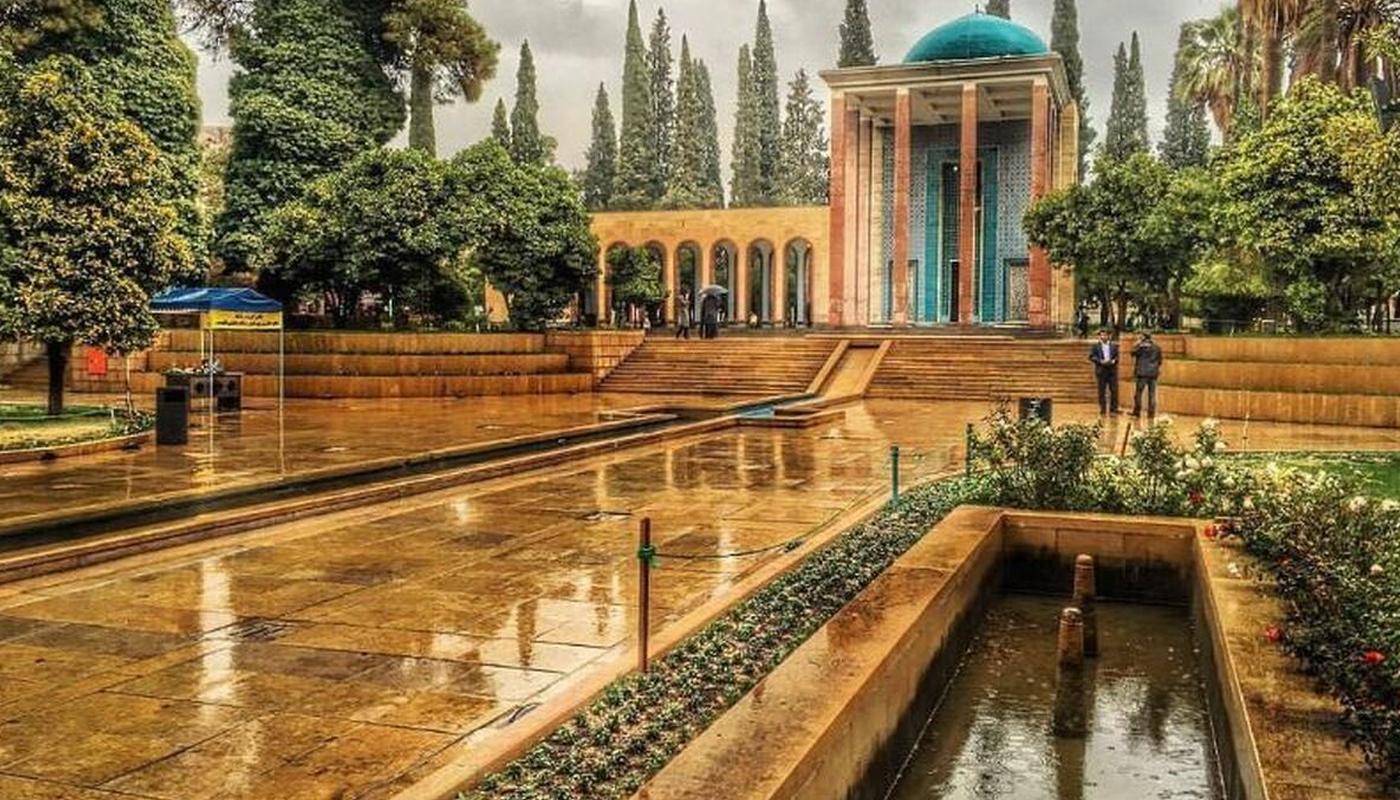
One of the most significant cultural attractions in Shiraz is the Tomb of Saadi, commonly known as Saadieh. Located near the beautiful Delgosha Garden, this peaceful monument attracts visitors, literature enthusiasts, and travelers from around the world.
The site is traditionally associated with the place where Saadi spent his final years. It is believed that he lived in a monastery (Khanqah) here and was buried at the same location after his death.
The original mausoleum was built in the 13th century by Shams al-Din Juvayni, the vizier of Abaqa Khan. After the structure underwent several changes and restorations over the centuries, the present mausoleum was constructed between 1950 and 1952 under the direction of Iranian architect Mohsen Foroughi.
The building features an elegant architectural design, with eight columns at its entrance. Its harmonious combination of traditional and modern architectural elements creates a distinctive atmosphere.
Surrounded by green gardens, tall trees, and beautiful pools, the tomb offers visitors a peaceful setting to appreciate Saadi's literary legacy and the cultural heritage of Shiraz.
For many travelers, visiting Saadieh is more than a sightseeing experience; it is an opportunity to connect with one of the most influential voices in Persian literature.
Tomb of Saadi: Visitor Information
Opening Hours
Thursday: 8:00 AM – 10:00 PM
Friday: 8:00 AM – 10:00 PM
Saturday: 8:00 AM – 10:00 PM
Sunday: 8:00 AM – 10:00 PM
Monday: 8:00 AM – 10:00 PM
Tuesday: 10:00 AM – 10:00 PM
Wednesday: 8:00 AM – 10:00 PM
Telephone: +98 71 3730 2300
Address: Boostan Street, next to Delgosha Garden, Shiraz, Fars Province, Iran.